100.1.1 Router IP Details and Common Login Issues

The 100.1.1 address often signals non-standard or misconfigured local IPv4 space, not a true gateway. Each device should reveal its actual router address in its network settings and be cross-checked against the known local gateway. Admin login issues commonly arise from credential drift, default exposure, and timeouts; reset to verified defaults, update firmware, and enforce strong passwords. Documentation and role-based access improve reliability, yet consistent safeguards leave open questions that require careful follow-up.
What 100.1.1 Means for Your Home Network
The address 100.1.1 refers to an IPv4 private or non-routable range commonly encountered in local networks and misconfigurations, rather than a standard gateway or router function. The designation prompts precise connectivity troubleshooting and security checks.
The address clarifies that such addresses may reflect misconfigured devices or ISP configuration gaps, guiding administrators to verify subnet, DHCP scope, and route awareness.
Confirming the 100.1.1 Gateway on Your Devices
To confirm a 100.1.1 gateway on devices, users should verify the actual router address configured in each device’s network settings and cross-check it against the known local gateway for the network. This process supports secure device onboarding, preserves network topology integrity, and prevents misrouting.
Procedures emphasize verification, documentation, and consistent configuration across endpoints to maintain freedom and resilience.
Common Admin Login Problems and Quick Fixes
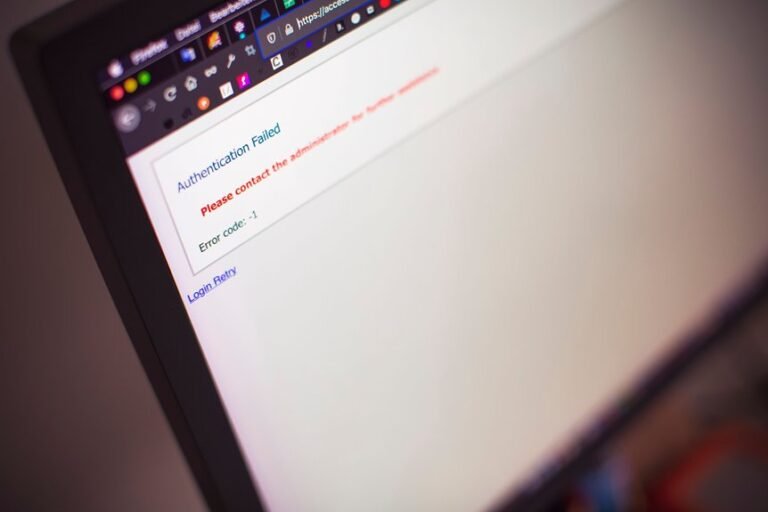
Common admin login problems frequently impede network maintenance, and swift, precise fixes are essential for restoring secure access. The guide outlines credential drift, default credential exposure, and session timeout causes, with deterministic steps: verify device address, reset to known good defaults, update firmware, and enforce strong passwords. unrelated topic and random pairing are noted as non-operational glossary references to avoid user confusion.
Best Practices to Secure and Optimize Access to 100.1.1
Access to 100.1.1 must be secured and optimized through disciplined access controls, continuous monitoring, and performance-aware configuration.
The procedure emphasizes security audits, strict access controls, and role-based permissions, enabling resilient entry points.
Regular firmware updates and validated troubleshooting steps ensure stability.
Documentation supports quick diagnostics, while ongoing monitoring detects anomalies, guiding timely configuration refinements and a freedom-respecting, secure network posture.
Frequently Asked Questions
What Devices Typically Use 100.1.1 as a Gateway?
The gateway 100.1.1 is typically used by consumer and small-business routers. Device types include laptops, smartphones, IP cameras, and IoT hubs. The gateway roles support network segmentation and security considerations within enterprise-like, freedom-friendly environments.
Can I Change 100.1.1 Without Losing Internet?
“Yes, it can be changed without cutting internet.” The guide outlines a careful device configuration workflow, prioritizing network security while preserving connectivity. It describes steps, risks, and verification to ensure continuous service and freedom through disciplined configuration.
Does 100.1.1 Apply to IPV6 Networks?
No, 100.1.1 does not apply to IPv6 networks; instead, does ipv6 routing and gateway addressing schemas govern traffic. It emphasizes network segmentation and device interoperability while maintaining security and freedom of configuration.
How Do I Verify 100.1.1 on macOS?
Verify gateway using macOS steps: open System Preferences, Network, select active connection, Advanced, TCP/IP, and note router address. Privacy concerns addressed, security best practices followed. This executed procedure ensures accurate verification while preserving user freedom.
Is 100.1.1 Safe to Expose to the WAN?
Yes, exposing 100.1.1 to WAN is unsafe. The evaluative stance notes security risks, and adherence to best practices is required: restrict origin, use VPN, monitor traffic, rotate credentials, and implement access controls for minimized exposure.
Conclusion
In the quiet hum of the home network, the 100.1.1 address remains a misnamed beacon rather than a true gateway. Devices await a confirmed route, credentials drift in the shadows, and sessions threaten to slip away. A decisive reset to known-good defaults, firmware updates, and strong, role-based access gates the path to stability. As configurations gather, the final link tightens—revealing a secure, reliable onboarding workflow that defends against the unseen risks lurking beyond the router’s glow.