168.551 Invalid Router IP Explained With Correct Format

168.551 as a router address is immediately suspect due to IPv4’s 0–255 octet limit. Proper formats use four decimal octets (or IPv6 notation with colon-separated hextets). This issue arises from a misread or mixed notation rather than a valid address. The discussion examines how IP formats actually work and offers concrete steps to verify a router’s address. A correct, subnet-consistent gateway matters for local networks, but tension remains about where the problem lies, inviting closer inspection.
What 168.551 Means and Why It’s Impossible
What does 168.551 signify, and why is it impossible? The value represents an Invalid Router IP, exposing Format Clarification needs and IP Class Misconceptions. It creates confusion about Address Type Differentiation, suggesting ranges beyond standard octets. Precision matters: legitimate addresses adhere to four octets, each 0–255. This misconception undermines clarity and freedom to configure networks correctly without ambiguity.
How IP Address Formats Really Work
IP address formats are defined by structured octets and standardized classes, subnets, and notations that govern how addresses are written and interpreted.
The topic explains that numeric segments, dotted or colon-separated schemes, and subnet masks establish scope and reachability.
Two word discussion ideas: IP formats, Router conventions for clear, portable networks and consistent routing behavior across devices.
Troubleshooting Steps to Fix Your Router’s Address
To fix a router’s address, begin by verifying the current configuration through a reliable method such as checking the router’s admin interface or running a basic network command on a connected device.
Next, adjust misconfigurations, ensure the gateway matches the subnet, and reset if needed.
Two word discussion ideas, Router addresses, promote concise, actionable steps for independent troubleshooting and clarity.
Real-World Checks: Private vs Public IPs and Best Practices
In handling router configurations after verifying address fixes, it is important to distinguish between private and public IPs and apply best practices accordingly.
Real-world checks require clear separation, consistent labeling, and adherence to policy.
Maintain firewall rules, document changes, and test connectivity.
Avoid unnecessary tangents, unrelated topic distractions, and inconsistent example formats; focus on precise, actionable steps for responsible network management.
Frequently Asked Questions
Can 168.551 Be a Valid Local Router IP Address?
No, 168.551 cannot be a valid local router IP. It falls outside private networking ranges and exhibits invalid subnet formatting. The statement illustrates an invalid subnet, reinforcing why private networking standards preclude such addresses.
Does an Invalid IP Affect All Devices on the Network?
An invalid IP can ripple effects, but not automatically sink every device. It often disrupts only the subnet’s traffic; invalid subnet choices hinder routing. IPv6 vs IPv4 matters; misconfigurations may still isolate devices on the network.
Should I Replace 168.551 With a Standard Private IP?
Yes, replace it with a private addressing scheme. Avoid disallowed formats; use standard private IP ranges (e.g., 192.168.x.x). This ensures compatibility and avoids network conflicts, while preserving accessible gateway configuration for devices.
Can I Use 168.551 in IPV6 Contexts or Only IPV4?
Like a misdrawn map, the answer clarifies: 168.551 is invalid in IPv6 contexts; only IPv4 uses dotted-decimal. It concerns invalid format, IP classes, מה? and guides: do not mix with IPv6.
What Error Messages Appear When Entering Wrong Router IP Formats?
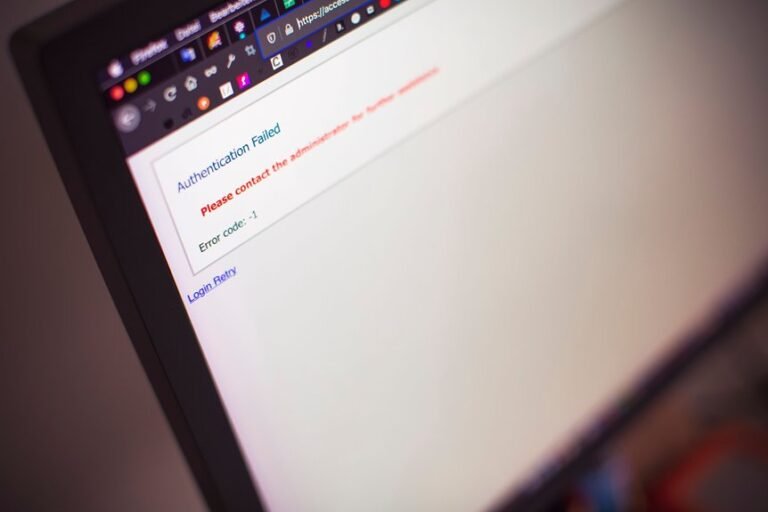
Incorrect router IP formats yield error messages such as “Invalid formats” and “Invalid IP address.” These alerts flag misconstructed values; users should verify syntax, length, and delimiters. Name collisions may arise if duplicate addresses exist on the network.
Conclusion
A faulty 168.551 address shatters like glass into a hundred useless shards, each one a reminder that an octet cannot exceed 255. In ordinary networks, four decimal octets or a valid IPv6 notation anchor the gateway securely within a subnet. The reader envisions a clean map: 192.168.x.x or 10.x.x.x, with a matching mask. Troubleshooting, verification, and alignment with private or public scopes transform chaos into a navigable homeland for devices.